
Trump has enacted a new law imposing significant sanctions on Russia and Iran, which could lead to tariffs of up to 100% on major energy importers like India and China.

US lawmakers are racing to amend the Russia sanctions bill before recess. One amendment specifically names India, China, and other countries as potential targets for 100% tariffs due to their oil trade with Russia. Another significant amendment proposes to scrap the tariff section entirely, while others address presidential waiver powers and aid to Ukraine.

India has stated its commitment to protecting its economic interests and ensuring energy security after the US House of Representatives passed a bill allowing the US President to impose tariffs of up to 100 per cent on countries, including India and China, for purchasing Russian crude oil. The Ministry of External Affairs affirmed India's resolve to maintain diversified energy sourcing and has articulated its concerns to US interlocutors regarding the bill's potential implications.

The US House of Representatives has passed the Lindsey O Graham Sanctioning Russia and Iran Act of 2026, authorising President Trump to impose sanctions on Russia's energy sector and tariffs on countries like India and China that purchase Russian oil and gas. The legislation aims to curb Russia's ability to evade existing sanctions and reduce global dependence on its energy exports, despite some Democratic opposition to increased tariff authority for the President.

President Donald Trump is set to sign the Sanctioning Russia and Iran Act, which includes tariffs on countries buying Russian oil and gas, such as India. India has voiced concerns over the potential impact on its ties with the US and the global energy market.

US President Donald Trump is expected to sign the Lindsey O. Graham Sanctioning Russia and Iran Act of 2026 later on Friday (local time). A White House official confirmed the development to ANI without revealing further details.

India women's team seamer Kranti Gaud has been fined 10 per cent of her match fee and received one demerit point by the ICC for breaching the Code of Conduct during the T20 Asia Cup final against Sri Lanka. Gaud was penalised for an aggressive gesture after dismissing a batter. Separately, the Pakistan women's team was fined for a slow overrate in their semifinal match.
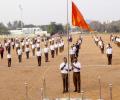
India has strongly rejected remarks by the US Commission on International Religious Freedom (USCIRF) officials calling for sanctions against the Rashtriya Swayamsevak Sangh (RSS) and advising against diplomatic courtesies for its leaders. The External Affairs Ministry spokesperson labelled USCIRF a "biased" organisation with its own agenda, lacking credibility.

Indian-American Congressman Raja Krishnamoorthi voted in favour of a Russia sanctions act in the US House, diverging from his Democratic party and other Indian-American lawmakers. The bill, which passed, imposes tariffs on Russian oil and gas buyers, potentially impacting India and China, and exempts US uranium purchases from Russia.

The United States has sanctioned four India-based companies, including a customs broker and three other firms, for their involvement in importing petroleum and petrochemical products from Iran. This action is part of "Operation Economic Outcast," a broader US campaign to sever Iran's financial lifelines and prevent funding for its destabilising activities.
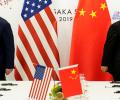
Top US and Chinese officials, including Vice Premier He Lifeng and Treasury Secretary Scott Bessent, held "candid, in-depth and constructive" talks in New York on economic and trade issues, with a specific focus on artificial intelligence. These discussions precede Chinese President Xi Jinping's anticipated visit to Washington and occur amidst new US sanctions targeting countries purchasing Russian oil and gas, and the US unveiling an "AI Force."
Indian benchmark equity indices, Sensex and Nifty, closed lower due to persistent geopolitical tensions in the Middle East and elevated crude oil prices, with investors remaining cautious ahead of fresh US sanctions on Iran.

A bipartisan group of US Senators has agreed to fast-track a bill allowing the President to impose sanctions on major purchasers of oil from Russia and Iran. This legislation, known as the Lindsey O. Graham Sanctioning Russia and Iran Act of 2026, aims to restrict funding for Russia's war efforts and Iran's energy and weapons sectors, potentially impacting countries like China and India through tariffs and other restrictions.

The Supreme Court was informed that sanction is awaited to prosecute Madhya Pradesh minister Kunwar Vijay Shah for his remarks against Army officer Col Sofiya Qureshi. The SIT probe is complete, and a chargesheet will be filed once sanction is obtained. Shah had previously apologised for his controversial comments.

The US Senate has overwhelmingly approved a bill, the Lindsey O. Graham Sanctioning Russia and Iran Act of 2026, which aims to punish Russia and its major petroleum product buyers, including China and India. The legislation allows the US President to impose 100 per cent tariffs on goods from the top five importers of Russian oil and gas, and also extends sanctions on Iran's energy sector. The bill, championed by the late Senator Lindsey Graham, now moves to the House of Representatives for further approval.

The US Commission on International Religious Freedom (USCIRF) has recommended sanctions against the Rashtriya Swayamsevak Sangh (RSS) and advised the US government against extending diplomatic courtesies to its leaders. This comes ahead of RSS Chief Mohan Bhagwat's visit to the US, with USCIRF officials citing allegations of attacks on religious minorities by RSS sub-groups. India has consistently rejected USCIRF's reports as biased and selective.
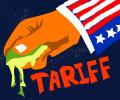
A bipartisan group of US senators has introduced a comprehensive bill imposing extensive sanctions on Russia, with India identified as one of five countries that could incur tariffs for its continued purchase of Russian oil.

The US House of Representatives has advanced a bill that would empower President Donald Trump to impose 100 per cent tariffs on countries, including India, that purchase oil and gas from Russia, and also extend sanctions on Iran. The legislation, which previously passed the Senate, aims to curb Russia's energy revenue amidst the Ukraine conflict.

The US House of Representatives is debating a bill that would authorise the President to impose sanctions on Russia and steep tariffs on its oil and gas trading partners, including India and China. The bill, aimed at pressuring Russia over the Ukraine war, has faced opposition but is expected to be put to a vote.

'If you listen to a rowdy in a class, he will keep on bullying you.' 'India can say do whatever you want. We will not compromise on anything.'

India has urged the United Nations to update its sanctions regime against Afghanistan, arguing that it must reflect the changed political reality and focus on incentivising positive actions rather than solely relying on punitive measures. India highlighted its ongoing humanitarian and development support for the Afghan people.

Indian stock market investors are closely monitoring crude oil prices, geopolitical developments in West Asia, and the implications of the US Sanctioning Russia and Iran Act, which could impose tariffs on countries, including India, that purchase Russian crude.

'It is a blunt and dangerous attempt to pressure India to sign BTA on one-sided terms.'

US Vice President JD Vance and Prime Minister Narendra Modi held a phone call to discuss expanding the India-US comprehensive global strategic partnership, focusing on trade, defence, energy security, emerging technologies, and critical minerals. The discussion comes amidst rising tensions in West Asia and recent regional realignments, with both leaders reaffirming their commitment to strengthening cooperation.

China has strongly rejected a US bill that would impose tariffs on countries, including India, for purchasing Russian oil and gas. Beijing views the "Lindsey O Graham Sanctioning Russia and Iran Act 2026" as an act of "long-arm jurisdiction" and interference in its sovereign trade relations, asserting that its economic cooperation with other nations is based on equality and mutual benefit.

Russian President Vladimir Putin asserted that any attempts to undermine India's sovereignty through 'threats of sanctions' would 'boomerang immediately' under Prime Minister Narendra Modi's leadership, highlighting India's sovereign decision-making and strong national interests.
India is making a significant push to establish itself as a global semiconductor manufacturing hub, driven by strategic investments and policy support. The upcoming SEMICON India 2026 event will showcase the country's advancements and ambitions in this critical industry, which underpins virtually all modern electronic devices and has faced global supply chain vulnerabilities.
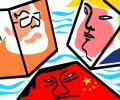
The challenge for India lies in navigating complex landscape to its best advantage. The BRICS Summit will test its navigation skills, asserts former foreign secretary Shyam Saran.

Chinese President Xi Jinping is set to visit the United States from September 23 to 25 for summit talks with US President Donald Trump, with discussions expected to cover critical economic and trade issues, including AI, and the recently signed US sanctions law targeting countries buying Russian oil and gas.

The Election Commission of India has defended its Special Intensive Revision (SIR) of voters' lists, asserting that differing views among Commissioners are a normal part of deliberations and all orders carry full legal sanction, following reports of two Commissioners red-flagging issues.

India has dismissed Pakistan's recent announcement of a seven million rupees bounty on Jaish-e-Mohammed chief Masood Azhar as a "gimmick," demanding concrete action against terrorism. India highlighted Pakistan's history of similar "phoney announcements" and its alleged sheltering of Azhar, while Pakistan faces international pressure from the FATF to crack down on terror financing.

India has expressed serious concern over Houthi attacks on Saudi Arabia's civilian infrastructure and economic assets, stating that such actions threaten regional stability and freedom of navigation through the Bab-el-Mandeb strait. External Affairs Minister S Jaishankar discussed the issue with his Saudi counterpart. India also condemned the targeting of commercial shipping after an Indian national went missing following an attack on a Panama-flagged ship off Oman.

'In the current environment, India is effectively paying a premium for supply security and diversification.'

The Sports Ministry has approved a 768-member Indian contingent, including 503 athletes and 246 officials, for the 20th Asian Games in Aichi-Nagoya, Japan. The athletics team has the largest support staff, while cricket teams also have significant backing. India will compete in 36 disciplines.

India successfully facilitated a significant diplomatic meeting between Iranian President Masoud Pezeshkian and UAE Crown Prince Sheikh Khaled bin Mohamed bin Zayed Al Nahyan on the sidelines of the BRICS Summit in New Delhi. This interaction, a diplomatic breakthrough given ongoing West Asia conflicts, occurred as BRICS adopted a declaration urging restraint and protection of civilians in the region, highlighting the bloc's commitment to peace and stability.

Hockey India president Dilip Tirkey has denied sanctioning an emergent Executive Committee Meeting called by secretary Bhola Nath Singh, intensifying an internal power struggle. The dispute stems from a jersey colour change controversy and the secretary's attempt to address various issues, including the Hockey India League's future and upcoming elections, which Tirkey claims is beyond his authority to convene.

India has become a significant supplier of gasoline to Russia, with Indian refiners providing 1 million barrels in the last two months, as Ukrainian drone attacks severely disrupt Russia's domestic fuel production.

The Sports Ministry has invested over Rs 702 crore in the last three years to prepare Indian athletes for the upcoming Asian Games in Japan, featuring 310 debutants.

Iranian President Masoud Pezeshkian urged BRICS nations to expand trade in national currencies and build an inclusive global economic framework. He criticised "unilateral sanctions" by Western powers, stating they make emerging economies vulnerable and impact global food security. Pezeshkian emphasised BRICS' role in creating a balanced world order and highlighted Iran's geopolitical and energy capacities for cooperation.

Sri Lanka A's Vishen Halambage and senior wicketkeeper Niroshan Dickwella have been sanctioned on separate counts by the Sri Lanka Cricket-appointed match referee Pradeep Jeyapragash.
